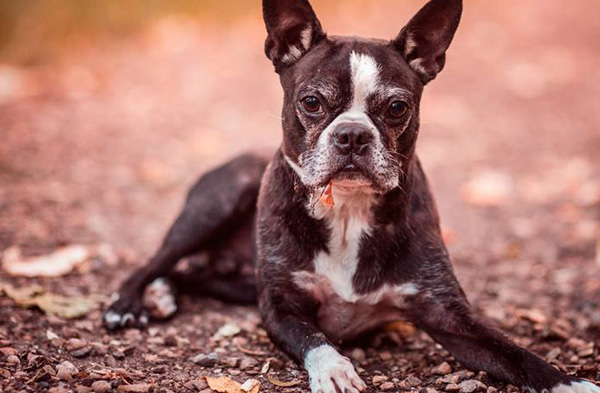
How many times have we humans heard the expression, “You’re only as old as you feel”? And why is it that some days, despite our actual age, we feel younger than we are, while other days, we feel older, much older?
So it is with our canine companions. What constitutes a senior in one breed may be an adult in another – with plenty of room for peppiness in both. Although most veterinarians agree that a dog is considered “senior” around the age of 7, what matters more is the size, not the number. Small dogs mature slower, tend to live longer than large dogs, and become seniors later in life. Dogs weighing less than 20 pounds may not show signs of aging until they’re around 12. Fifty-pound dogs won’t seem older until they’re around 10, while the largest dogs start “showing their age” at around 8.

But if wisdom comes with age, so do benefits. And in the case of those lovingly dubbed “gray muzzles”, the benefits of adopting a senior dog are many. Think puppy at heart without the puppy problems. Because in adopting a senior dog, you CAN judge a book by its cover. What you see is what you get: a mature animal whose physique and persona are fully formed — no baby teeth to gnaw on your furniture, no yappy energy to wear you out – allowing you to see, within moments, if yours is a mutual match or not. Although, as with everything else, there are always exceptions to the rule, opening your home to an older dog means opening your heart to an experience akin to instant gratification.

Calmer than their younger counterparts, older dogs are house trained and have long since mastered the basic commands of “sit,” “stay,” “down,” and “come.” And contrary to popular belief, you CAN teach an old dog new tricks. Dogs are trainable at any age, and older dogs are just as bright as younger ones, with a greater attention span which makes them that much easier to train. Older dogs are loyal, loving and experienced companions, ready to walk politely on leash with you, run gaily off leash (with good recall) in the dog park, and play frisky games of fetch with your new tennis ball or their own, well-worn one.

Less demanding of your attention than younger dogs, they are content with their own company for longer periods, then will lavish you with all of their adoration and affection when it’s cuddling time. Due to their lower energy level, senior dogs are easier to care for and make superlative companions for senior people. They also make friendly and gentle playmates for children — particularly if they were once some other family’s cherished pet.
One common misconception about older, adoptable dogs is that they are “problem dogs”. And yet, most of them have lost their homes, not because of their behaviour or temperament, but because of changes in the lives, lifestyle or circumstances of their original owners.

Sadly, for many senior dogs awaiting adoption, age IS seen as a number, even if that number is only 5, and even if that same dog has 10 years or more to live, to love and be loved. More difficult to adopt than younger dogs, and just as deserving of a permanent home, they are all too often overlooked and for all the wrong reasons.
Senior dogs seem to sense when they receive a second chance at the rest of their lives. And anyone wise enough to adopt one, will not only reap the benefits, but be the lucky recipient of a love as unconditional as it is enduring.
Last modified: November 25, 2017


What an awesome write-up!!!!
My 88 year old father lost his little Boston Terrier Judy in the fall and was/is heartbroken. She was 13 and we got her for him after my mother died. He said he would get another Boston if he was 10 years younger! Would he be a candidate for fostering a Senior Boston? I’m just wondering about that possibility or if any very senior dogs would come your way?
Hi Tammie, I am so very sorry for your father’s loss of Judy. It is so heartbreaking when we lose our fur babies. If your father is interested in fostering a senior dog, the first step would be for him to fill out a foster application and have a read through our fostering page: http://bostonterrierrescuecanada.com/how-to-help/foster/
We do sometimes get senior dogs surrendered to us, so there is definitely a possibility!
Thanks will do. I will talk to him after I get him moved back into his house for May. He also had a housefire a year ago in addition to losing his dog so a tough year. Why I thought maybe a foster might be good for him when he’s back in his home of 38 years. Nice yard and his dogs are always very spoilt!
Oh geez, that’s terrible! I hope everything goes well with the move and he does consider putting in an application!